
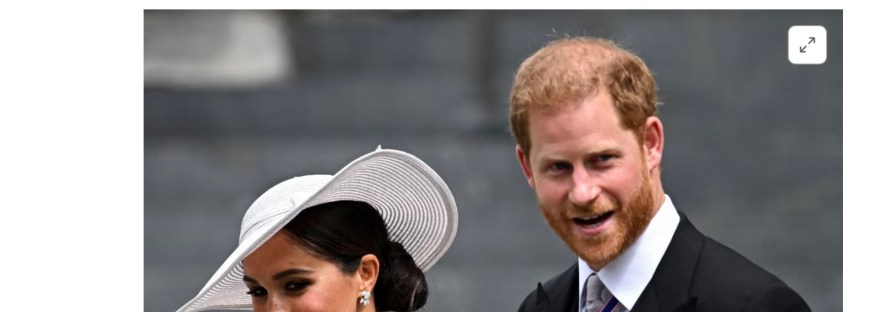

Harry and Meghan are moving back to Britain and their children are starting school here.
There will inevitably be plenty written about what that means for the Royal Family. I am interested in something rather different.
Education.
Because underneath the headlines is a decision that will be familiar to thousands of internationally mobile families around the world:
Where do we want our children to grow up, belong and be educated?
For some families, education follows relocation. A new job takes them to Singapore, Dubai or London and they find the best school they can.
Increasingly, I think the opposite is also true.
Education drives the move.
Families identify what they want for their children and then make remarkably significant decisions to access it. They change cities. They cross borders. They choose boarding. Sometimes they reorganise their entire family life.
Harry and Meghan are, of course, an unusual example. But the underlying question is not unusual at all.
What education do we want for our children?
And British education still has considerable global pull.
The numbers tell part of the story
ISC Research now identifies more than 15,000 international schools worldwide educating 7.7 million students. Enrolment has increased by more than 50% over the past decade.
More significantly, growth is increasingly being driven by local families choosing an international education rather than simply expatriate families needing one because they happen to live overseas.
That is a big shift.
These families have choices. They can choose British, American, IB, bilingual or national systems. They can educate locally or internationally. Many can also choose where in the world they live.
So why does British education continue to attract them?
Qualifications matter
GCSEs and A Levels provide a clear academic pathway and are understood by universities internationally. For ambitious families, that confidence and portability have real value.
But I don’t think qualifications explain the real attraction.
The best of British education has always been much bigger than examination results.
It is academic ambition alongside sport, music, drama, debate, leadership, service, clubs, houses, trips, competitions and strong relationships with teachers.
It is the expectation that a young person will participate in the life of a community rather than simply collect qualifications from it.
Having worked with international families for much of my career, I have rarely heard parents describe the school they want solely in terms of examination grades.
They talk about their child.
- Will they be happy and known?
- Will they make friends and grow in confidence?
- Will they discover what they are good at?
- Will this education open doors?
- Will they be ready for life beyond school?
These are the questions that really drive school choice.
That combination of ambition and belonging matters particularly for globally mobile children.
A young person may have lived in three or four countries before they reach secondary school. Their parents may work internationally. Family life can stretch across continents.
In that world, school is more than a place of instruction.
It can become the anchor.
And this is where the Harry and Meghan story becomes interesting beyond celebrity.
Their children have already experienced life across countries and cultures. The decision to educate them in Britain brings together questions of family, identity, stability, opportunity and belonging.
That is precisely the set of questions internationally mobile families navigate every day.
There is an opportunity here for Britain too
We often talk about British education as an export. We open British schools around the world, license curricula and qualifications and recruit international students.
But education also brings the world to Britain.
Families who relocate for their children’s education rent and buy homes, spend locally, travel, build professional networks, establish businesses and sometimes remain long after school has finished.
Education is part of Britain’s wider global attractiveness.
We should not take that for granted.
International families now have exceptional schools available almost everywhere. History and reputation may get Britain onto the shortlist.
They will not keep us there.
Academic excellence remains fundamental, but it is no longer enough.
Young people also need curiosity, communication, adaptability, creativity and the confidence to apply what they know in unfamiliar situations.
The opportunity is therefore not to reinvent British education. It is to take the best of it forward.
Academic depth. Recognised qualifications. Extraordinary breadth. Community and belonging. Combined with serious preparation for the future.
Perhaps that is what the Harry and Meghan story reminds us.
British education travels extraordinarily well.
But sometimes its pull is strong enough for families to travel back to it.


